
Gathering the right documents is the most time-consuming part of the Express Entry process. This complete checklist organizes everything you need — from language tests before you create your profile, to police certificates and medical exams after your ITA. Proper preparation can mean the difference between a smooth application and frustrating delays or even refusal.
Documents Needed Before Creating Your Profile
These are the foundation documents you need before you can even submit your Express Entry profile with accurate information. Without these core documents, you cannot calculate your Comprehensive Ranking System (CRS) score accurately, and any errors in your profile can lead to misrepresentation issues down the line.
Passport
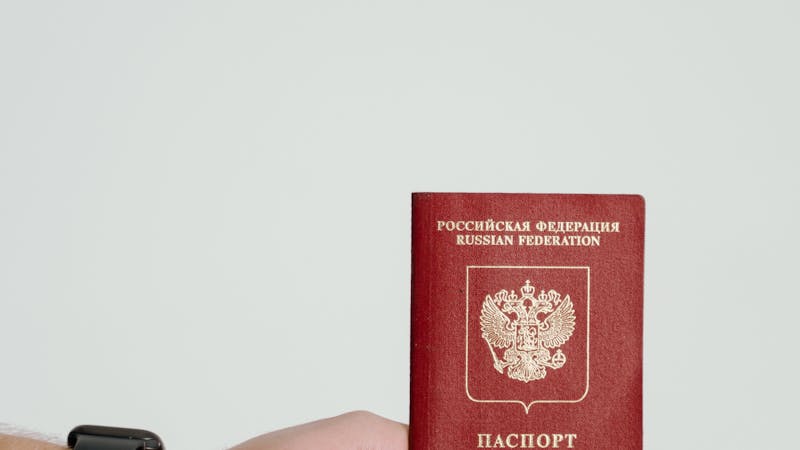
Passport: Valid passport covering your most recent travel history. Your passport must be valid for at least six months beyond your expected arrival date in Canada. If you have had multiple passports, keep the old ones — you will need them later to account for all countries visited. IRCC requires a complete travel history for the past ten years, including all trips outside your country of residence. This includes short trips, business travel, and vacations. Make photocopies of all biographical pages and any pages with stamps or visas. If your passport is expiring soon, consider renewing it before creating your Express Entry profile to avoid complications later.
Language Test Results
Language Test Results: Official results from IELTS General Training or CELPIP (English), or TEF Canada / TCF Canada (French). Results must be from a test taken within two years of your Express Entry profile submission. The test must be from IRCC's list of approved tests — no other language certificates are accepted, including TOEFL, Cambridge exams, or academic IELTS.
Language scores are critical to your CRS score. Each point in language ability can add significant points to your total. For example, achieving CLB 9 or higher in all four abilities (reading, writing, listening, speaking) awards maximum points. In 2025, the minimum CRS scores for Federal Skilled Worker draws have ranged from 486 to 509, making every language point valuable. If your first test results are lower than expected, you can retake the test and update your profile with better scores. Many candidates take the test multiple times to maximize their scores.
Book your language test well in advance — test centers in major cities like Toronto, Vancouver, and Montreal often have waiting periods of three to six weeks. Online CELPIP tests offer more flexibility and faster results (typically within 4-5 business days), while IELTS results take 3-13 days depending on whether you choose computer-delivered or paper-based testing.
Educational Credential Assessment (ECA)
Educational Credential Assessment (ECA): Required if any of your education (diploma, degree, or certificate) was completed outside Canada. Designated organizations include WES (World Education Services), IQAS (International Qualifications Assessment Service), ICES (International Credential Evaluation Service), PEBC (Pharmacy Examining Board of Canada), CGFNS (Commission on Graduates of Foreign Nursing Schools), and others depending on your credential type.
ECA processing typically takes 5-20 business days for basic evaluations once all documents are received, but document verification from your institution can add weeks or months. For example, WES requires official transcripts sent directly from your university in sealed envelopes. If your university is in a country with slow postal service or bureaucratic processes, start this process at least four to six months before you plan to submit your Express Entry profile.
As of 2025, WES remains the most popular ECA provider, processing over 200,000 assessments annually for Canadian immigration. Their fees range from $240 to $350 CAD depending on the service speed you choose. IQAS, operated by the Government of Alberta, charges $200 CAD and is known for thorough assessments but longer processing times (typically 15-20 weeks). Choose your ECA provider based on your credential type, country of education, and timeline.
Your ECA report will indicate the Canadian equivalency of your foreign credential — for example, a three-year bachelor's degree from India may be assessed as equivalent to a Canadian bachelor's degree, while a three-year degree from some other countries may only equal a two-year diploma. This equivalency directly affects your CRS points, so understanding your likely assessment outcome helps you plan realistically.
Employment Records
Employment Records: For each position you list, have ready: employer name and full address, job title, start and end dates, weekly hours, and a clear description of your main duties matching your claimed NOC code. Even before creating your profile, organize your employment history carefully. You need at least one year of continuous full-time skilled work experience (or equivalent part-time) in the past ten years to qualify for Federal Skilled Worker or Canadian Experience Class programs.
Identify the correct NOC (National Occupational Classification) code for each position. As of November 2022, Canada uses the NOC 2021 system with five-digit TEER (Training, Education, Experience and Responsibilities) categories. TEER 0, 1, 2, and 3 occupations are eligible for Express Entry. Use the official NOC website to search your job title and read the lead statement and main duties carefully. Your actual duties must match at least 70% of the listed duties for that NOC code.
Common mistakes include choosing a NOC code based on job title alone rather than actual duties, or selecting a higher-skilled NOC than your duties support. IRCC officers are trained to identify NOC mismatches, and this is a leading cause of application refusals. If you are unsure, consult with a Regulated Canadian Immigration Consultant (RCIC) before submitting your profile.
Pro Tip: Create a spreadsheet tracking all your documents, their expiry dates, and processing times. Language tests are valid for two years, ECAs for five years, and medical exams for 12 months. Police certificates have varying validity periods depending on the country. Planning your document timeline ensures nothing expires before you receive your ITA or submit your final application.
Documents Needed After Receiving an ITA
Once you have an ITA (Invitation to Apply), you have 60 days to gather and upload all of the following documents. This deadline is firm — IRCC rarely grants extensions except in exceptional circumstances with strong supporting evidence. Missing the deadline means your ITA expires and you must re-enter the pool and wait for another invitation.
Passport Photos
Passport Photos: Two photos meeting IRCC's exact specifications (dimensions 35mm x 45mm, background color plain white or light-colored, head size between 31mm and 36mm from chin to crown, and no glasses). Many pharmacies and photo studios in Canada know the IRCC specifications — bring the official spec sheet from the IRCC website to avoid rejections. Shoppers Drug Mart, London Drugs, and Costco photo centers are popular options in Canada, typically charging $10-$15 for a set of photos.
Write your name and date of birth lightly in pencil on the back of each photo. Photos must be taken within the last six months and show your current appearance. Common rejection reasons include shadows on the face, incorrect background color, head tilted, or wearing glasses. If you wear glasses for medical reasons, you may include a note from your optometrist, but IRCC prefers photos without glasses.
Police Certificates
Police Certificates: From every country where you have lived for six or more months in a row since age 18. This is cumulative — if you lived in the UK for four months, returned home, then went back to the UK for three more months, that totals seven months and requires a UK police certificate.
For Canada, this is an RCMP criminal record check based on fingerprints. Take your fingerprints to an RCMP-accredited fingerprinting service (search "RCMP accredited fingerprinting" plus your city). The cost is typically $25-$75 for fingerprinting, plus $25 for the RCMP processing fee. Results are usually available within 3-5 business days if you have no criminal record, or up to 120 days if further verification is needed.
For your home country and other countries of residence, check IRCC's country-specific instructions on their website. Each country has different procedures. For example, FBI background checks for the United States take 12-14 weeks if applying by mail, or 3-5 business days if using an FBI-approved channeler (at higher cost). UK Disclosure and Barring Service (DBS) checks take 2-8 weeks. Indian Police Clearance Certificates (PCCs) can be obtained from Passport Seva Kendras or through Indian embassies abroad, typically taking 2-4 weeks.
Some countries require you to apply in person, which may be impossible if you no longer live there. In such cases, IRCC may accept a letter explaining why you cannot obtain the certificate, along with alternative evidence of good character. However, this is assessed case-by-case, and it's always better to obtain the actual certificate if possible.
Police certificates are generally valid for six months from the date of issue, though IRCC's specific requirements vary by country. Start these on day one after your ITA — they are often the longest-lead-time documents and the most common cause of application delays.
Medical Exam
Medical Exam: Book with an IRCC-designated panel physician as soon as possible after your ITA. You can find panel physicians on the IRCC website by searching your city or country. In Canada, major cities have multiple panel physicians, but appointments can be booked weeks in advance, especially during peak immigration periods. In early 2025, wait times for medical appointments in Toronto and Vancouver averaged 2-3 weeks.
Bring your passport, ITA letter, and any relevant medical records (especially if you have a pre-existing condition). The exam includes a physical examination, chest X-ray, and blood and urine tests. Inform the physician you are applying for permanent residence. The physician submits results directly to IRCC through the eMedical system — you will receive a copy for your records, but you do not upload it yourself.
Medical exams are valid for 12 months from the date of the exam. Your permanent residence visa must be issued before this expiry date, and you must land in Canada before the medical expires. The cost is typically $200-$350 CAD per adult, $100-$150 for children aged 5-15, and $50-$100 for children under 5. These fees are not covered by provincial health insurance even if you are already in Canada.
IRCC assesses medical inadmissibility based on three criteria: danger to public health, danger to public safety, or excessive demand on health or social services. Excessive demand is defined as costs exceeding $24,057 CAD per year (2025 threshold) or total costs over five years exceeding $120,285 CAD. Conditions that may trigger excessive demand reviews include severe disabilities requiring ongoing care, chronic kidney disease requiring dialysis, or conditions requiring expensive medications. However, many applicants with medical conditions are approved — each case is assessed individually.
Employment Reference Letters
Employment Reference Letters: On company letterhead, signed and dated by a supervisor or HR representative. Must include: your full name, job title, dates of employment (start and end dates, or start date and "to present" if still employed), hours per week, annual salary or hourly wage plus benefits, and a detailed description of your main duties and responsibilities.
IRCC compares these letters against your claimed NOC code duties — ensure they align closely. The letter should list 6-10 specific duties you performed, using action verbs and concrete examples. Generic letters stating "performed all duties as required" are insufficient. For example, if you are claiming NOC 21311 (Computer Engineer), your letter should specify duties like "designed and developed embedded software systems for automotive applications," "conducted system integration testing and debugging," and "collaborated with hardware engineers to optimize system performance."
If your employer refuses to provide a detailed letter, or if the company has closed, you have options: letters from colleagues who can attest to your duties (accompanied by their business cards and contact information), pay stubs and tax documents showing employment, and a detailed personal affidavit explaining your duties and why you cannot obtain an employer letter. These alternatives are accepted but require more supporting evidence.
For self-employed work, provide business registration documents, tax returns showing business income, contracts with clients, and letters from clients confirming your work. Self-employment can count toward Express Entry experience if it meets the NOC skill level requirements.
Proof of Settlement Funds
Proof of Settlement Funds: Required unless you have a valid job offer or are applying under Canadian Experience Class while currently working in Canada on a valid work permit. As of 2025, the required amounts are: $14,690 CAD for one person, $18,288 for two people, $22,483 for three people, $27,297 for four people, $30,690 for five people, $34,917 for six people, and $38,875 for seven or more people. These amounts are updated annually by IRCC.
Provide recent bank statements covering the last six months showing sufficient funds. The statements should clearly show your name, account number, institution name, and current balance. For multiple accounts, include all of them and provide a summary letter from your bank on letterhead confirming the total available funds. Funds in investment accounts, RRSPs, or non-liquid assets generally do not count unless they can be quickly liquidated and converted to cash.
The funds must be available and transferable. Money borrowed from others does not count — IRCC may request additional documentation proving the source of funds if there are sudden large deposits. If you receive a gift from family members, include a gift deed signed by the donor, proof of the transfer, and a letter from the donor confirming the funds are a gift with no expectation of repayment.
If your funds are in a foreign currency, convert them to Canadian dollars using the Bank of Canada exchange rate on the day you submit your application. Provide the exchange rate calculation in your letter of explanation.
Education Documents
Education Documents: Copies of diplomas, degrees, and official transcripts for all post-secondary education. Your ECA report (already obtained for your profile) must be included. If your credential was earned in Canada, copies of your Canadian diploma or degree plus official transcripts from the institution are required. Transcripts must show all courses taken, grades received, and confirmation of degree awarded.
If your documents are not in English or French, you must provide certified translations along with copies of the original documents. Certified translations must be completed by a member of a provincial or territorial translation association in Canada, or by a certified translator outside Canada whose certification is verified.
Biometrics
Biometrics: If you have not given biometrics in the last 10 years for a Canadian immigration application, you will receive a Biometrics Instruction Letter (BIL) after submitting your application. You must give fingerprints and a photo at a Service Canada location (if in Canada) or VAC (visa application center) abroad within 30 days of receiving the BIL.
The biometrics fee is $85 CAD per person or $170 CAD per family. In Canada, Service Canada locations in major cities offer biometrics appointments — book online through the IRCC website. Outside Canada, locate your nearest VAC on the VFS Global or other designated service provider websites. Allow 1-2 weeks for biometrics clearance after giving them. Your application processing will not proceed until biometrics are completed.
Warning: Document fraud or misrepresentation carries severe consequences. Submitting false documents, lying about your work experience, or misrepresenting your qualifications can result in a five-year ban from applying to Canada, refusal of your application, and potential criminal charges. Always provide truthful, accurate information and genuine documents. If you made an honest mistake in your profile, correct it immediately through a webform or in your post-ITA application with a letter of explanation.
Additional Documents for Specific Situations
Spouse or Common-Law Partner
If you have a spouse or common-law partner included in your application: their passport (valid for at least six months), language test results (if they scored points for your CRS — they can also be included without language tests but will not contribute points), their ECA (if applicable and if claiming points for their education), marriage certificate (and certified translation if not in English or French), or common-law statutory declaration and supporting proof of cohabitation.
For common-law partners, you must prove you have lived together continuously for at least 12 months. Provide lease agreements or property ownership documents showing both names, joint bank account statements, joint utility bills, insurance policies naming each other as beneficiaries, and statutory declarations from friends or family attesting to your relationship. IRCC scrutinizes common-law relationships carefully — provide comprehensive evidence covering the entire 12-month period.
If your spouse or partner is not accompanying you to Canada, you must still declare them in your application and provide their passport and other basic documents. Failing to declare a spouse or dependent is misrepresentation and can result in permanent inadmissibility to Canada.
Dependent Children
If you have dependent children (under 22 years old and not married or in a common-law relationship, or over 22 but financially dependent due to physical or mental condition): birth certificates for each child, custody documents (if applicable, especially if you are separated or divorced from the other parent), adoption papers (if applicable), and medical exam results for each child included in the application.
If your child's other parent is not accompanying you to Canada, you need a notarized letter of consent from that parent authorizing the child's immigration to Canada. If you have sole custody, provide court documents proving this. If the other parent is deceased, provide a death certificate. IRCC takes child custody issues seriously — incomplete documentation can delay your application significantly.
Children over 22 can only be included as dependents if they have been financially dependent on you since before age 22 due to a physical or mental condition. Provide medical documentation, proof of financial dependence, and a detailed explanation of their condition and care needs.
Job Offer and LMIA
If you have a valid job offer and are claiming CRS points for it: the employer's offer letter meeting IRCC's requirements (must be for a full-time, non-seasonal job for at least one year, in a NOC TEER 0, 1, 2, or 3 occupation), and LMIA documentation (a positive Labour Market Impact Assessment from Employment and Social Development Canada) or proof of LMIA exemption.
LMIA-exempt job offers include those under international agreements (CUSMA/NAFTA professionals, CETA, etc.), intra-company transfers, or certain provincial nominee programs. Provide the LMIA exemption code and supporting documentation. Your employer must also submit a job offer through the IRCC Employer Portal and provide you with the offer number to include in your application.
Not all job offers qualify for CRS points. The offer must be from an employer with a positive LMIA or LMIA exemption, and you must currently be working for that employer on a valid work permit (or be authorized to work in Canada), or have a valid work permit for that employer and a valid job offer. Simply having a job offer letter without meeting these conditions does not award points.
Provincial Nomination
If you received a provincial nomination through a Provincial Nominee Program (PNP), include your provincial nomination certificate and all supporting documents required by that province. A provincial nomination adds 600 CRS points, virtually guaranteeing an ITA in the next draw. However, you must intend to live in that province (except Quebec, which has its own immigration system outside Express Entry).
Each province has different PNP streams and requirements. For example, Ontario's Human Capital Priorities stream targets candidates in the Express Entry pool with specific NOC codes and CRS scores. British Columbia's Skills Immigration stream requires a job offer from a BC employer. Research your target province's PNP requirements early in your planning process.
Document Organization and Submission Tips
Organize your documents logically before uploading. IRCC's online portal has specific document categories — upload each document to the correct category. If a document fits multiple categories, upload it to the most relevant one and mention in your letter of explanation that it also supports other sections.
Create a comprehensive letter of explanation (LOE) that serves as a cover letter for your application. In your LOE, explain any gaps in employment, reasons for missing documents (if any), unusual circumstances in your background, and how your documents support your application. A well-written LOE helps the visa officer understand your application quickly and can prevent misunderstandings.
Scan all documents in color at high resolution (300 dpi minimum) and save as PDF files. Name each file clearly (e.g., "Passport_JohnSmith.pdf" or "Employment_Letter_ABC_Company.pdf"). The maximum file size for each upload is 4 MB — if your file is larger, use PDF compression tools to reduce the size without losing readability.
Keep copies of everything you submit. Save all files in a secure backup location (cloud storage and external hard drive). If IRCC requests additional documents later, you will want to reference what you already submitted.
Double-check every document before uploading. Common errors include uploading the wrong file, uploading documents in the wrong category, submitting expired documents, or forgetting to include translations. Review your entire application at least twice before final submission.
Timeline and Processing Expectations
As of 2025, IRCC's service standard for Express Entry applications is six months from the date of submission. However, actual processing times vary. Applications with complete, well-organized documents and no complications often receive decisions in 3-4 months. Applications requiring additional verification, security checks, or missing documents can take 8-12 months or longer.
After submitting your application, you can track its status through your IRCC online account. The stages include: application received, medical exam passed, biometrics completed, background check in progress, and final decision. Background checks include criminality checks (usually completed within weeks) and security checks (which can take months, especially for applicants from certain countries or with complex travel histories).
If IRCC requests additional documents (an "ADR" or Additional Document Request), respond as quickly as possible. You typically have 30 days to provide requested documents. Delays in responding can delay your application significantly. If you cannot obtain a requested document within the deadline, submit what you have along with a detailed explanation and evidence of your efforts to obtain the missing document.
Once your application is approved, you will receive a Confirmation of Permanent Residence (COPR) and, if you are outside Canada, a permanent residence visa in your passport. You must land in Canada before the expiry date on your COPR (usually one year from your medical exam date or your passport expiry date, whichever is sooner). Plan your landing accordingly — you can do a "soft landing" (enter Canada briefly to activate your PR status, then return to your home country to wrap up affairs) or move permanently right away.
Frequently Asked Questions
Do I need to submit original documents or are copies acceptable?
For the Express Entry online application, you submit scanned copies of all documents. Do not mail original documents unless specifically requested by IRCC. However, keep all original documents safe — you may need to present them at your landing interview or if IRCC requests verification. Certified copies are not required for online submission, but certified translations are required for any documents not in English or French.
What happens if one of my documents expires while my application is being processed?
If your passport expires during processing, you must submit a copy of your new passport through the IRCC webform immediately. If your medical exam expires before a decision is made, IRCC may request a new medical exam. Police certificates generally remain valid if they were valid when you submitted your application, but IRCC may request updated certificates if processing takes longer than expected. Language test results and ECAs must be valid at the time you submit your Express Entry profile, but they can expire during application processing without issue.
Can I update my Express Entry application after submission if I get a new job or improve my language scores?
After you submit your post-ITA application, you cannot update information to gain more CRS points — your application is assessed based on the information in your profile at the time of your ITA. However, you must update your application if your circumstances change in ways that affect your eligibility (for example, if you lose your job and were claiming Canadian work experience points, or if your marital status changes). Submit updates through the IRCC webform with supporting documents and a clear explanation. Significant changes may require you to decline your ITA and re-enter the pool with updated information.
This article is for informational purposes only and does not constitute legal advice. Immigration rules and document requirements change frequently. Always verify current requirements on the official IRCC website or consult with a Regulated Canadian Immigration Consultant (RCIC) or immigration lawyer for advice specific to your situation.